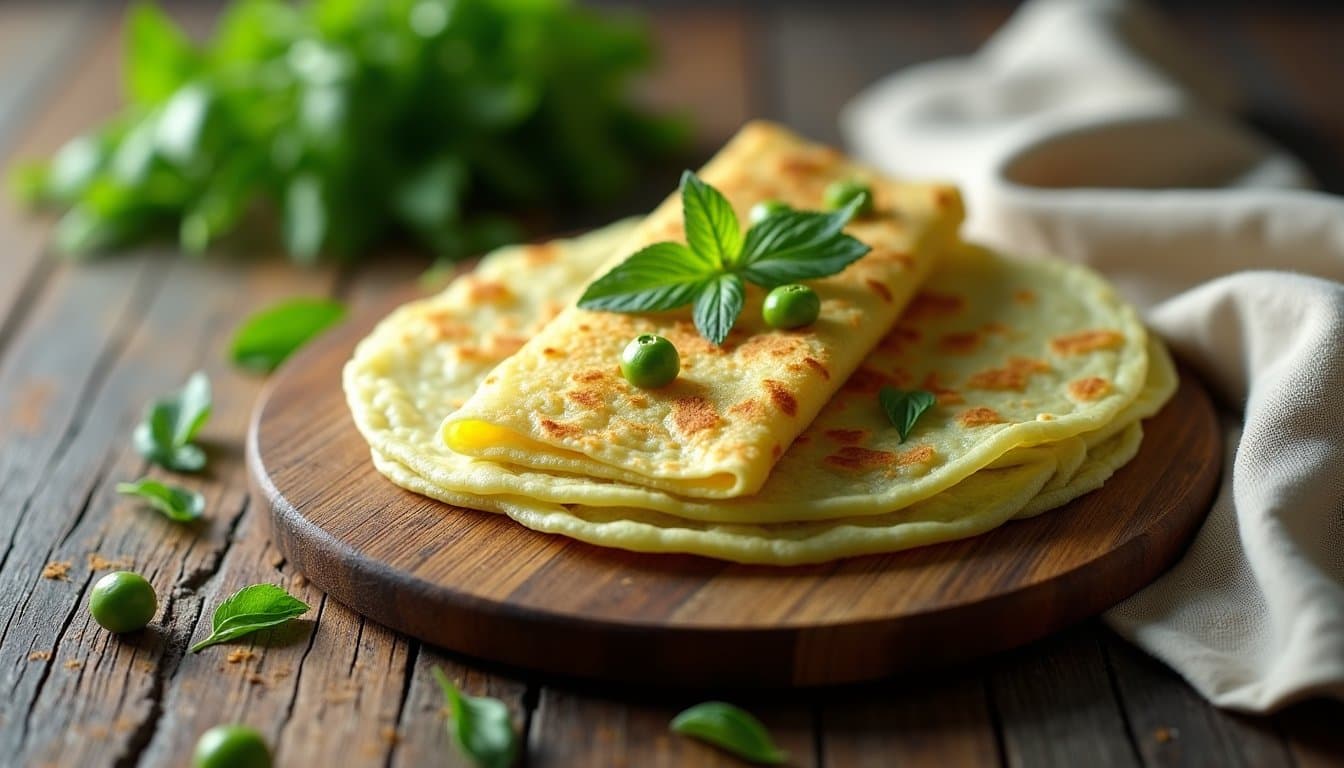
Spring Pea Tapioca Crepes with Charred Lime and Watercress Oil
- Total
- 35m
- Difficulty
- Medium
- Serves
- 4
- Origin
- Brazilian
Brazilian tapioca crepes get a raw-food makeover with blended fresh spring peas folded straight into the batter, then finished with a punchy watercress oil and limes charred directly over a gas flame. The starch in tapioca flour binds without heat, so the pea flavor stays grassy and bright rather than cooked into sweetness. It's a breakfast that genuinely tastes like the moment before summer shows up.
Ingredients
- 200g tapioca flour (polvilho doce), sifted
- 120ml cold filtered water
- 150g fresh spring peas, shelled and rinsed
- 1 tsp fine sea salt
- 2 limes, halved crosswise
- 60g fresh watercress, thick stems removed
- 80ml cold-pressed extra-virgin olive oil
- 1 small garlic clove, peeled
- 1/4 tsp flaky sea salt, for finishing
- freshly ground black pepper, to taste
- 50g pea shoots, for garnish
Instructions
1. Blend the spring peas with 60ml of the cold water in a high-speed blender for 90 seconds until completely smooth. Pass the mixture through a fine-mesh sieve, pressing firmly with a spoon. You want only the pale green liquid, about 80ml. Discard the solids or save them for vegetable stock.
2. Whisk the tapioca flour and fine sea salt together in a wide bowl. Slowly pour in the pea liquid and the remaining 60ml cold water, whisking constantly until you get a loose, pourable batter with no lumps. It should coat a spoon lightly. Rest it at room temperature for 10 minutes so the tapioca granules hydrate fully.
3. Make the watercress oil: blanch the watercress in boiling water for exactly 20 seconds, then plunge it immediately into ice water. Squeeze it very dry in a clean cloth, then blend with the olive oil and garlic clove for 2 full minutes. Strain through a fine sieve lined with a paper towel. The oil should be electric green. Season with a pinch of flaky salt and set aside.
4. Char the limes: hold each lime half directly over a gas burner flame with tongs, cut-side down, for 30 to 45 seconds until the surface blackens and blisters in patches. If you don't have a gas burner, place them cut-side down in a dry cast-iron pan on the highest heat for 3 minutes. Set aside to cool slightly.
5. To form the raw tapioca crepes, lightly oil a smooth, flat surface (a silicone baking mat works well). Pour about 60ml of batter onto the surface and spread it with the back of a spoon into a thin circle roughly 18cm across. The tapioca will set at room temperature into a pliable, slightly translucent sheet in about 4 minutes. Do not rush this. Repeat with remaining batter.
6. Carefully lift each crepe with a thin offset spatula. The texture should be silky and slightly chewy, similar to fresh rice paper. Fold each crepe into quarters or roll loosely.
7. Plate the crepes, drizzle generously with watercress oil, squeeze charred lime juice over the top, scatter pea shoots, and finish with flaky salt and black pepper.
Why It Actually Works
Tapioca flour is almost pure starch, and those starch granules absorb liquid and form a cohesive gel at room temperature given enough hydration time, which is why traditional Brazilian tapioca crepes don't actually require cooking to bind. Pea juice contributes chlorophyll and a suite of volatile aromatic compounds (mainly pyrazines and aldehydes) that stay sharp and grassy when never heated, a flavor you'd lose entirely if you cooked them into the batter. The charred lime adds furfuryl mercaptan and pyrazine-adjacent char compounds that mirror and amplify those same green, slightly sulfurous notes in the peas, making the combination feel intentional rather than accidental.
Variations
- Swap watercress for fresh shiso leaves in the oil to pull the flavor toward anise rather than pepper, which works particularly well if you add thin slices of radish inside the crepe fold.
- Add 1 tablespoon of white miso dissolved in the pea liquid before mixing the batter. The umami rounds out the grassiness and makes the crepes feel more substantial for a savory brunch spread.
- For a sweeter breakfast version, replace the watercress oil with a drizzle of raw honey and a sprinkle of toasted coconut flakes, and squeeze regular lime instead of charred.
Be the first to rate this recipe
Reader Tips
No tips yet — be the first!
More Strange Recipes
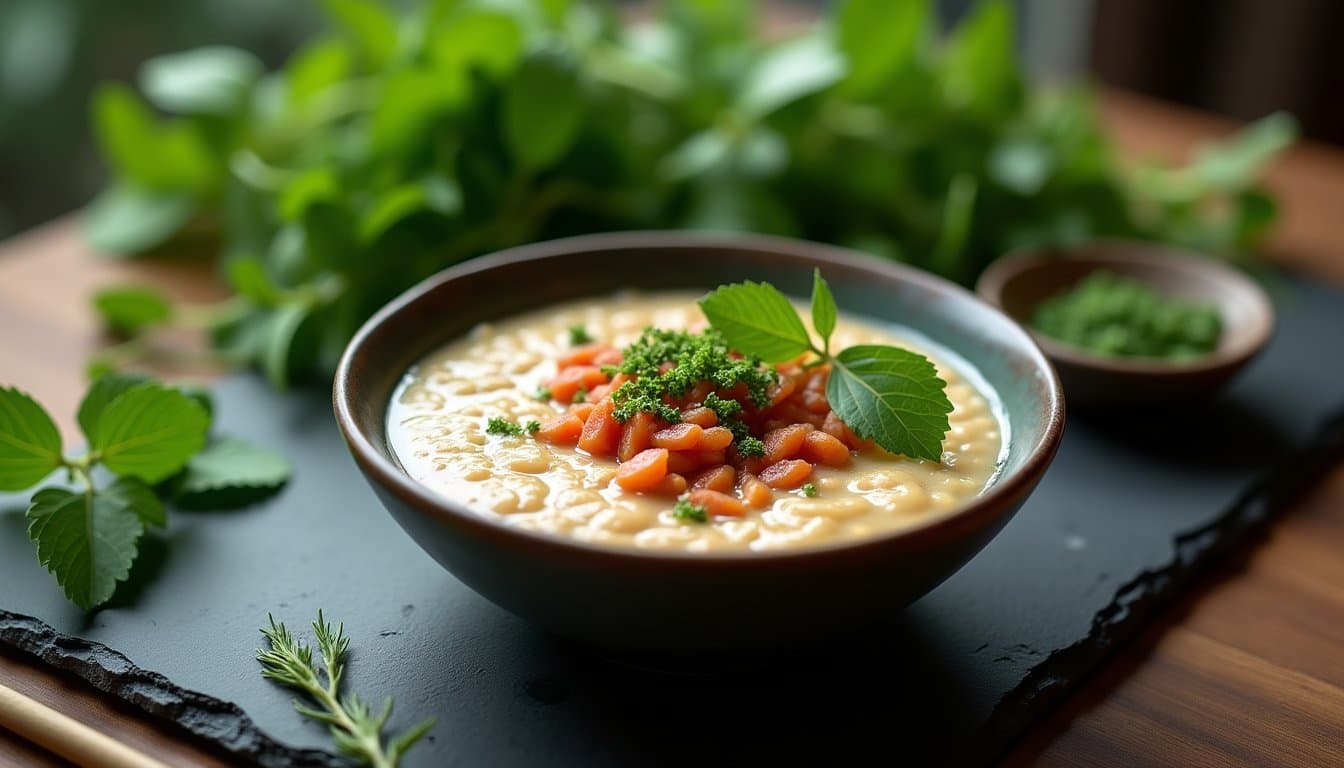
Fermented Oat and Anchovy Congee with Crispy Shallots
Picture a Nordic fisherman and a Cantonese grandmother snowed in together, arguing about breakfast until they land on something neither culture would claim but both should. Lacto-fermented rolled oats break down into a silky, congee-like base with a gentle tang that makes the briny, glutamate-rich anchovies sing rather than shout. The crispy shallots and spring onion cut through the richness with real textural contrast, and the result is simultaneously ancient, weird, and deeply correct.
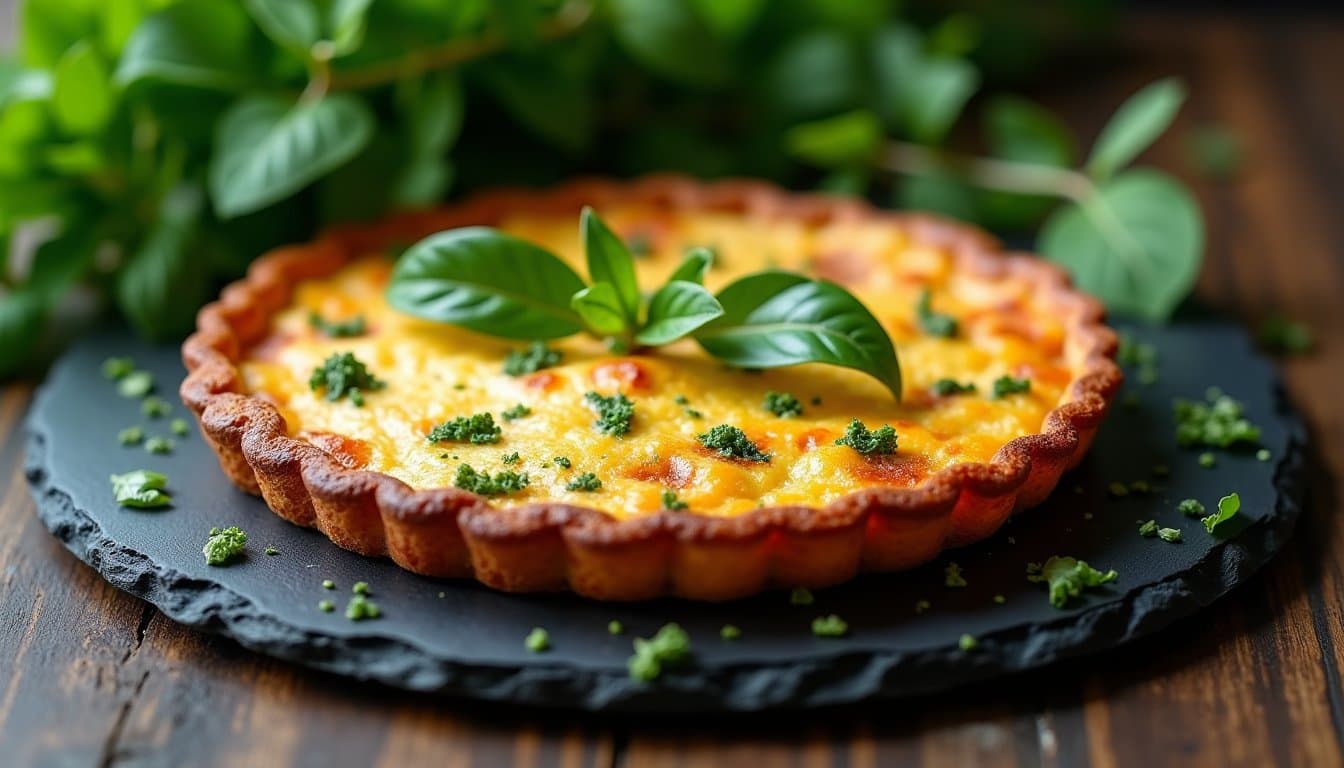
Morel Dutch Baby with Truffle Butter and Ramp Confiture
A Dutch baby is already a strange thing: pancake batter poured into a screaming-hot cast-iron skillet, then ballooned into a golden, custardy bowl by oven steam. This one goes further. Finely chopped morels go into the batter, truffle butter melts into the skillet's hot edge, and a jammy ramp confiture brings wild-onion sweetness to every bite. It tastes like a fine-dining tasting menu crashed your Sunday brunch. That's the whole idea.
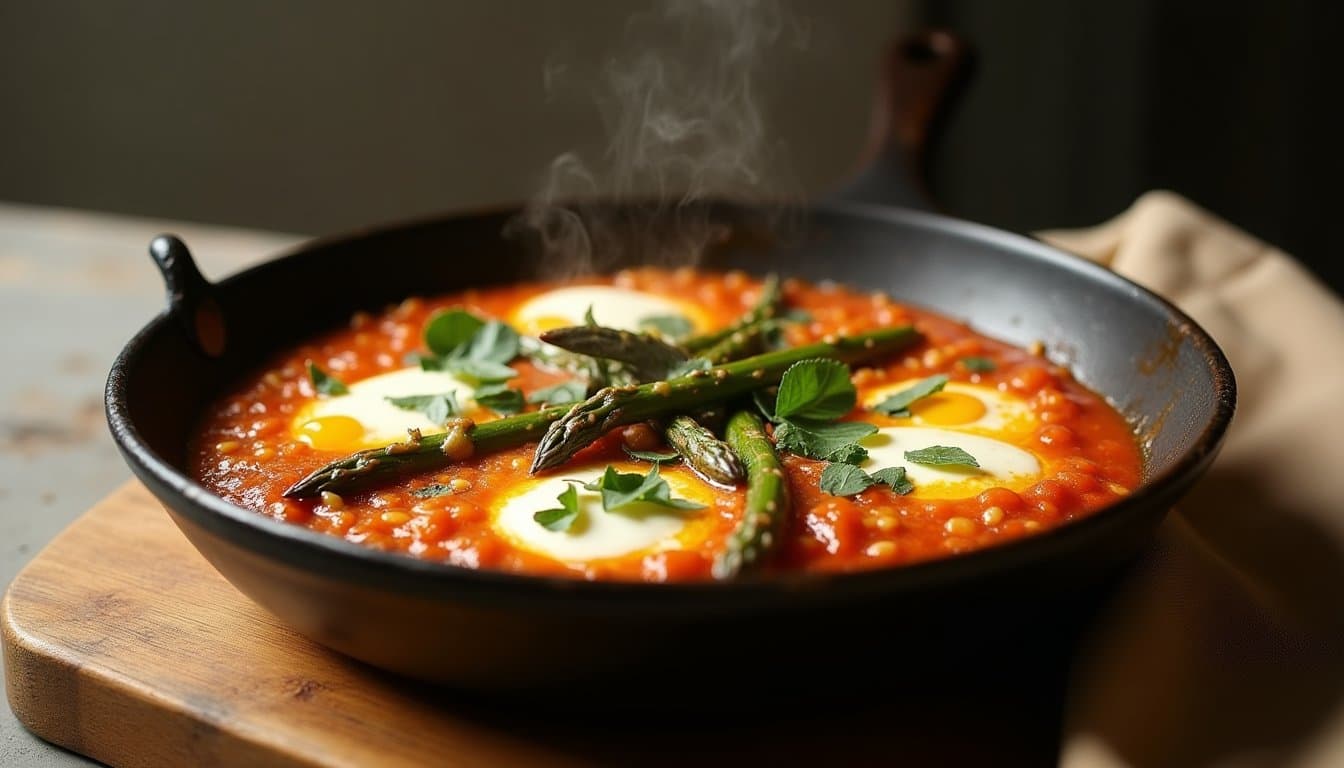
Asparagus & Feta Shakshuka with Wild Garlic and Morel Mushrooms
This isn't your standard shakshuka. Asparagus, morel mushrooms, and wild garlic move into the tomato-and-egg base alongside crumbled feta, and the result is stranger and better than it sounds. The eggs cook low and slow over the vegetable sauce, a trick borrowed from Moroccan tagine technique, so the whites stay silky and the yolks run jammy when you break them.
Get the weird stuff first.
New recipes every week. No fluff, no ads, just strange food.
You can unsubscribe anytime. No spam, ever.